Regular summer mowing
A steady mowing rhythm helps prevent the lawn from becoming overgrown between cuts. Frequency should follow active growth, not simply the month on the calendar.
June • July • August
Summer lawn maintenance in Clovis is about consistency without creating extra stress. Regular mowing, sensible mowing height, clean edging and realistic expectations help residential lawns look maintained through the Central Valley’s hottest weather.
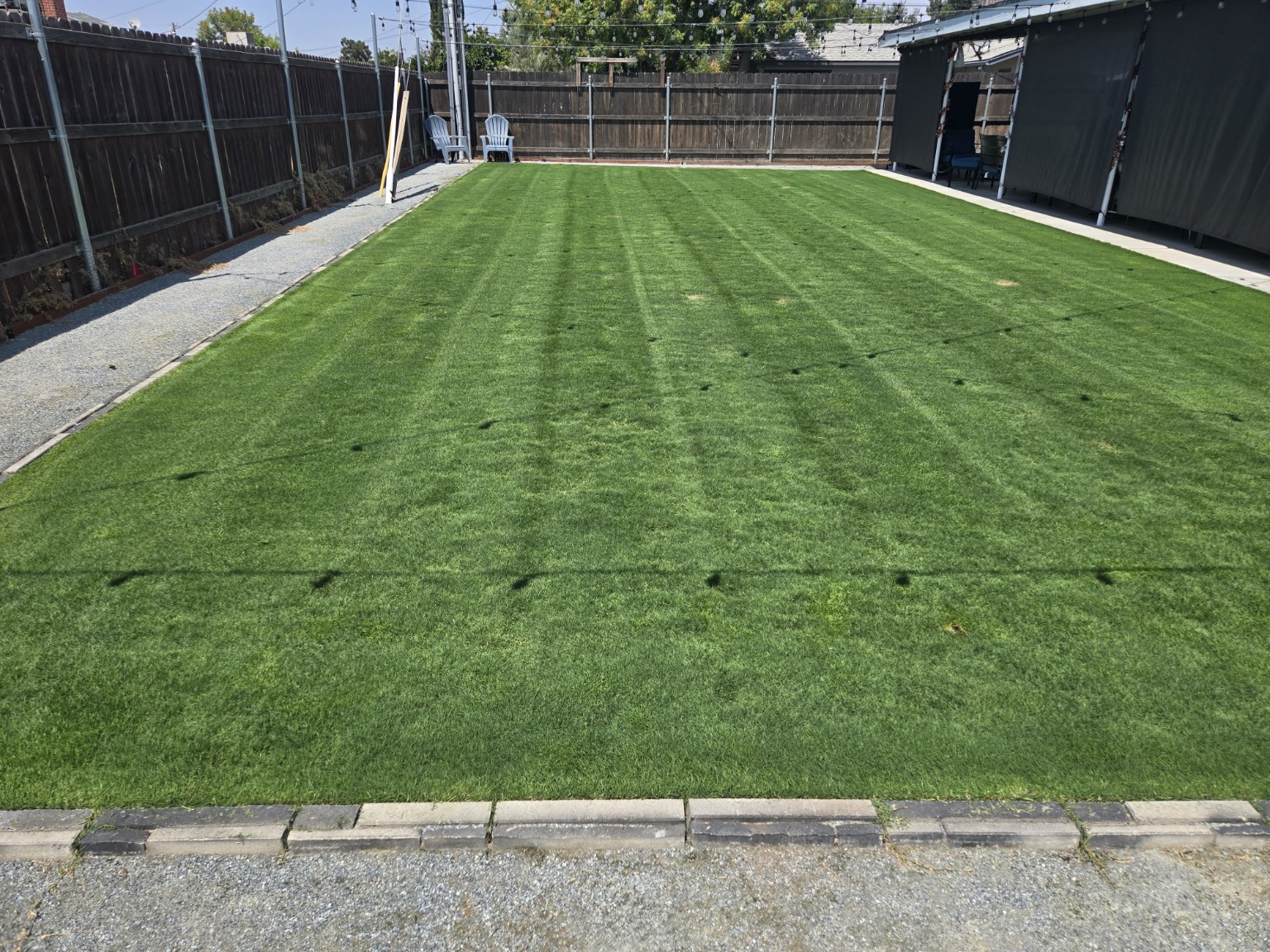
Summer priorities
Hot-weather care changes with the grass. Fescue and warm-season turf do not respond to July heat in the same way.
A steady mowing rhythm helps prevent the lawn from becoming overgrown between cuts. Frequency should follow active growth, not simply the month on the calendar.
Cutting a stressed lawn very short can remove too much leaf area at once. That can leave turf looking scalped and make recovery harder during extreme heat.
The right height depends on grass type and condition. During very hot periods, maintaining adequate leaf area is often more important than chasing an unusually low cut.
Fescue may lose color, thin or slow its growth during prolonged heat. Summer maintenance should focus on avoiding additional stress and preserving the lawn until milder conditions return.
Bermuda and other warm-season turf can be highly active in summer. Regular mowing and clean edges help manage that growth and keep the property looking finished.
Adequate, consistent watering supports summer lawns, but needs vary by property and turf type. Fertilizer-only lawn care should be used only where appropriate for the lawn’s current condition.
Seasonal timing
Use these monthly priorities as a guide. Extreme heat, turf type and actual growth should determine the final mowing and care decisions.
As heat builds, keep mowing regular and avoid removing too much leaf growth at one time. Mowing height should fit the turf type and current conditions.
Clovis heat can be severe. Fescue may slow or show stress, while warm-season grasses can remain active. A clean lawn does not need to be cut excessively short.
Continue practical mowing, edging and trimming while noting thin or stressed areas that may need attention when cooler fall conditions return.
Common questions
Fescue is a cool-season grass. Sustained Central Valley heat increases stress, especially where the lawn is cut too short or moisture is inconsistent.
Often, leaving more leaf area can help reduce avoidable stress, but the appropriate height depends on turf type and condition. Avoid making a dramatic height change in one mowing.
It can. Warm-season turf may grow actively, while heat-stressed fescue may slow. Service should follow actual growth rather than a rigid assumption.
Local, owner-operated service
Tell Tyler about your lawn and the service you have in mind.